Hello and let's continue the series about content automation. Today we have a small niche service, which perfectly works with Jasper.ai.
So, let's take the niche from the previous article about paints and product reviews. So, we need to compile a semantic core for a couple of dozen articles and give the content manager to "write" on Jarvis. Earlier I went through a fairly large number of competitors and related keywords by myself in Ahrefs, but today I increasingly turn to automation with LowFruits.io. Lowfruits is both faster and more visual in terms of seo-metrics. Sign up, take some free starter credits, and let's get into more detail in practice.
Go to the Amazon listing of one of the brands in our niche (for example) and look at the categories of popular products - sealers, primers, paints, enamels, etc. Note them down somewhere in a text file. Now let's move on to the main page of LowFruits and click the green button "Get Keyword Ideas". Type in the main keyword of one of the categories.
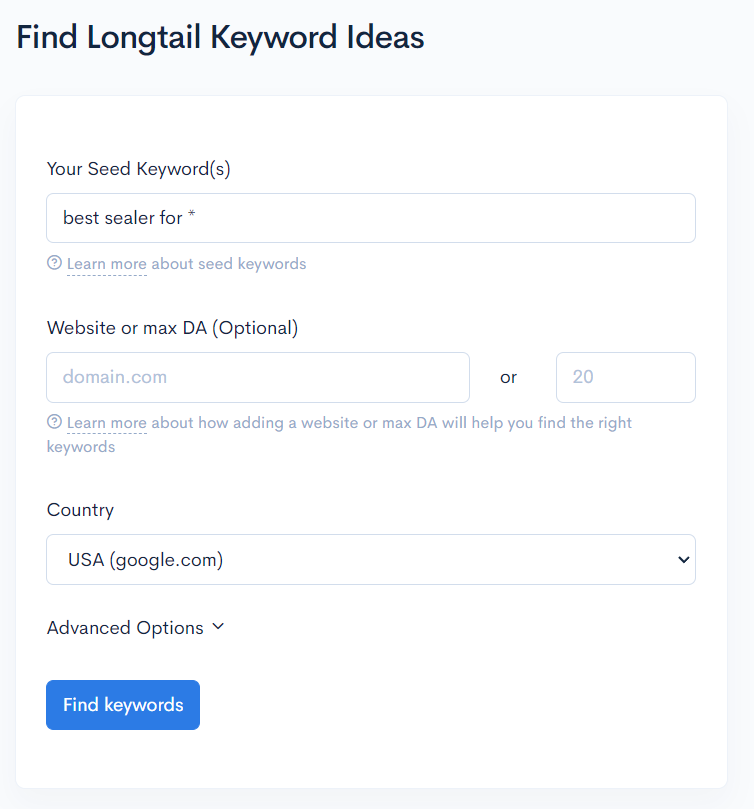
And fill in "Website or max DA" if you already have a site in a niche and want to know how much weaker or stronger it is than competitors. Just optional. Now, if we're building a niche site on a fresh new domain in the DA field type zero or leave blank. If the site has been up for some time already, then specify the URL of your site (or DA), which will be compared to competitors. Press "Find keywords" and get the results:
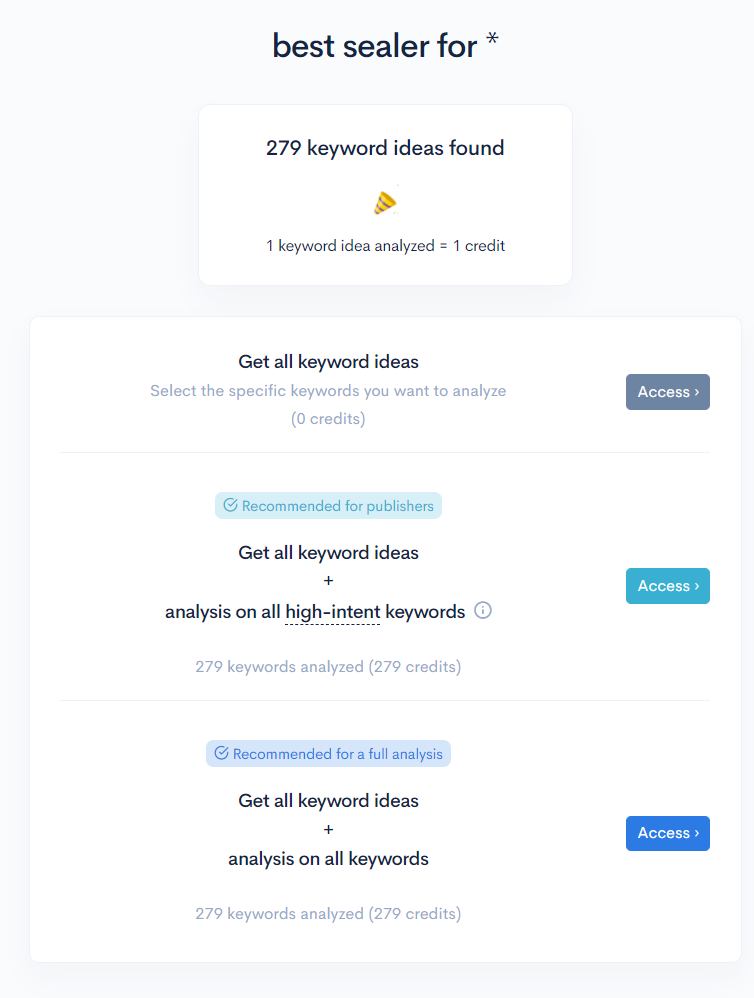
We are offered three options for analysis - free, but with limited functionality for 0 credits and advanced for 279 credits. In the free variant, we can choose an individual plan and spend 1 credit per keyword, it will be longer, but more efficient. I chose the middle, taking into account the keywords with buying intent (best, review, etc.) and a full report, especially since our main key is initially with the "best" modifier.
We wait about 5-10 minutes for the request to be processed. Great, we see the tabs, filters and a list. While we are not touching specific keywords go straight to the tab with Clusters, where we take the structure of the future website and approximately understand the volume of each group of queries.
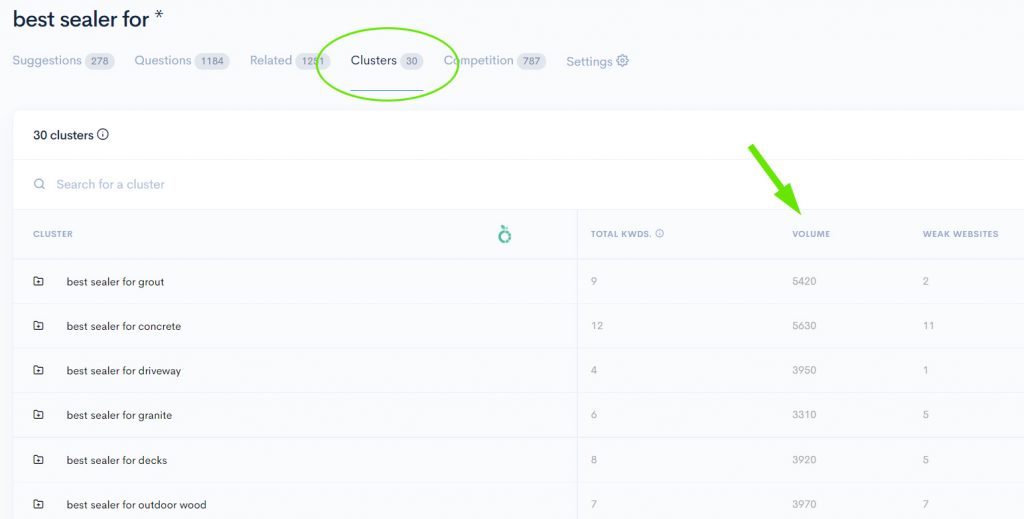
Expanding each group gives you the keywords for the articles with more detailed data.
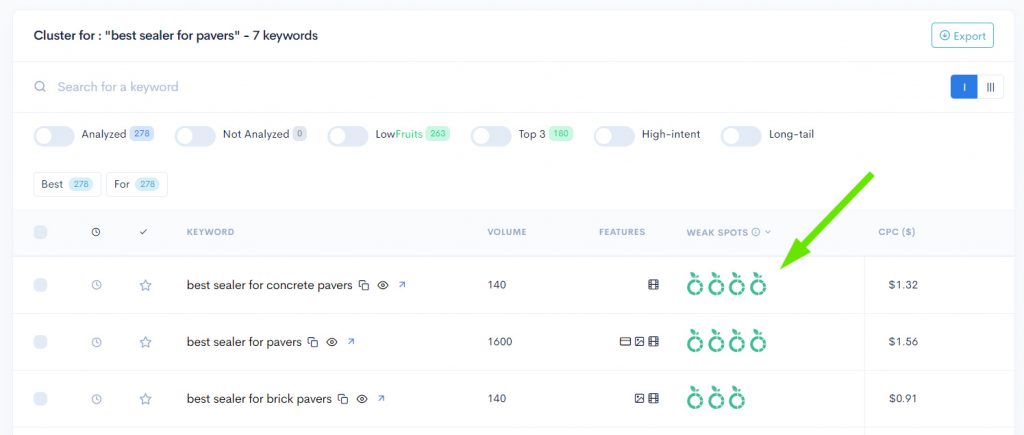
The apples show the number of websites in the top that we can potentially bypass.
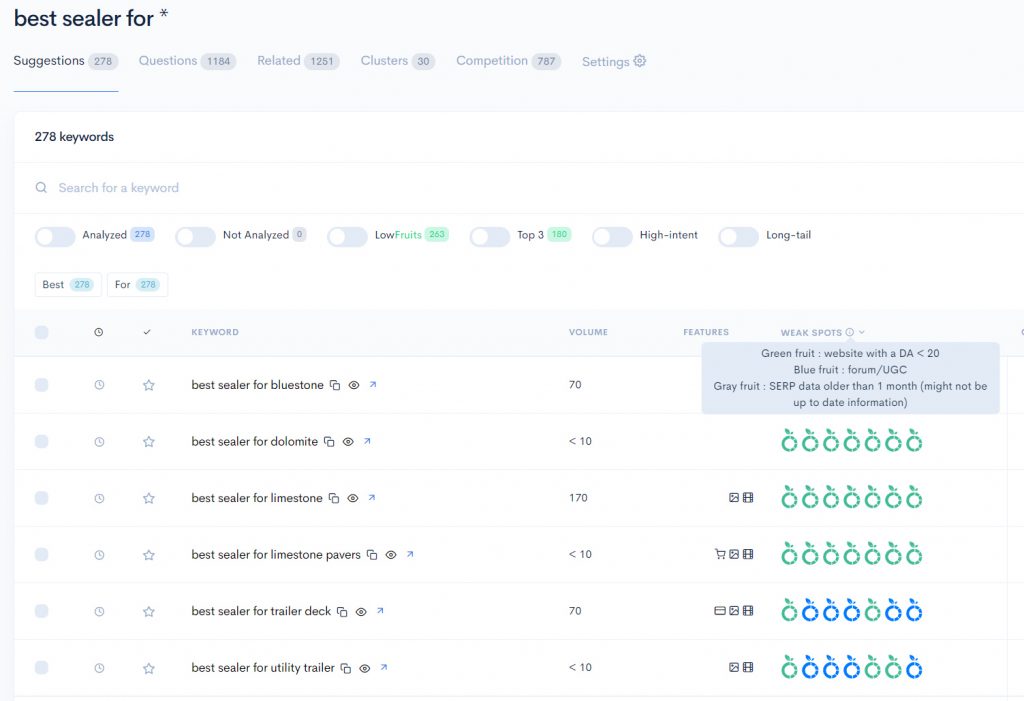
- Green apple - DA <20
- Blue apple - Discussion boards
- Gray apple - Outdated content
It goes without saying that there will be not many "best" keywords with low-competition a commercial niche. But let's go to Suggestions tab:
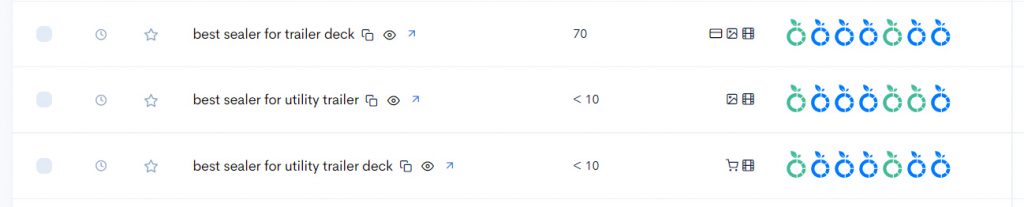
Whether to embed such queries in a more extensive article or write them out separately it depends on the niche and each specific keyword. If we saw that the product is good, then do some separate articles. There is plenty to choose from:
Moving to the Related tab. There, in fact, already begins an infinite amount of our article-related keywords.
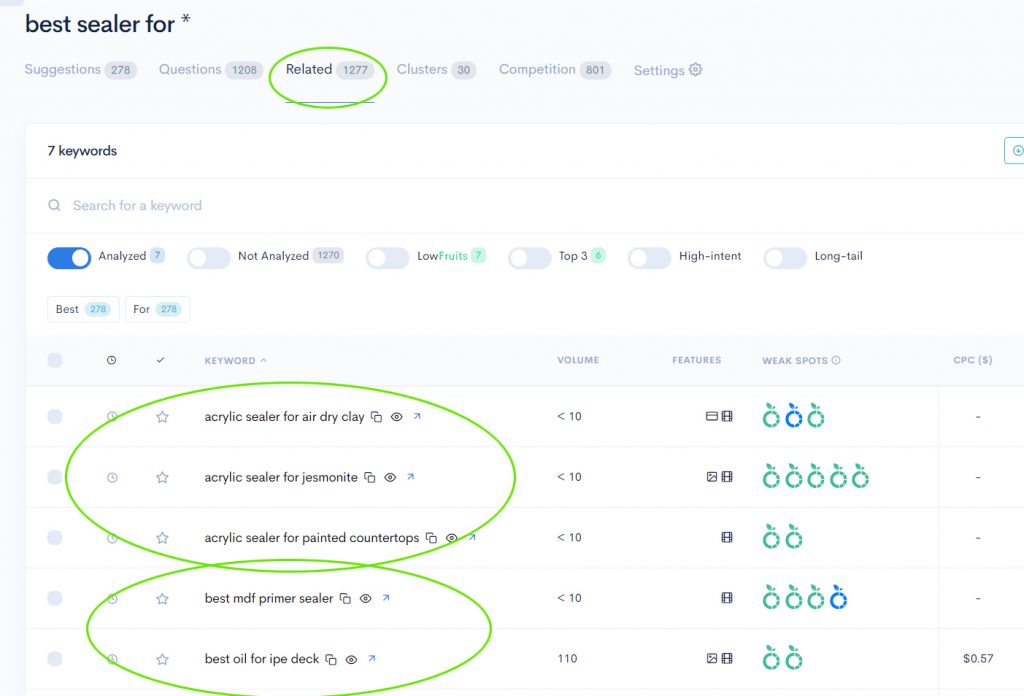
So, we form the main semantic clusters, add low-frequency keywords and expand them with related articles. Really, stop a long and tedious to looking at competitors and forums, switch to Lowfruits which is more convenient and faster than filtering out in Ahrefs.
Oh, I forgot. Be sure to check out Competition tab:
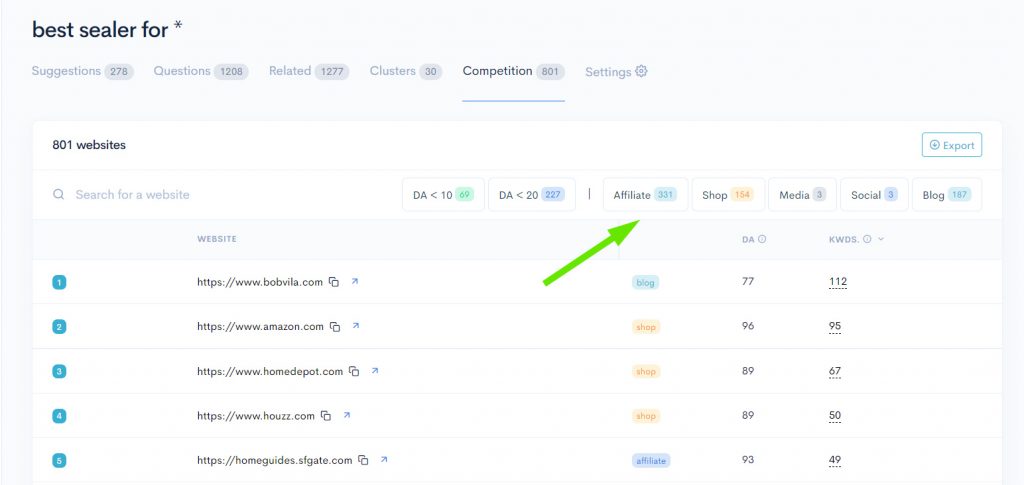
It helps to understand immediately who you have to compete in a niche. The fewer review sites will be there (shown with an arrow), the easier it will be to push through in SERP.
Leave a Reply